
Introduction
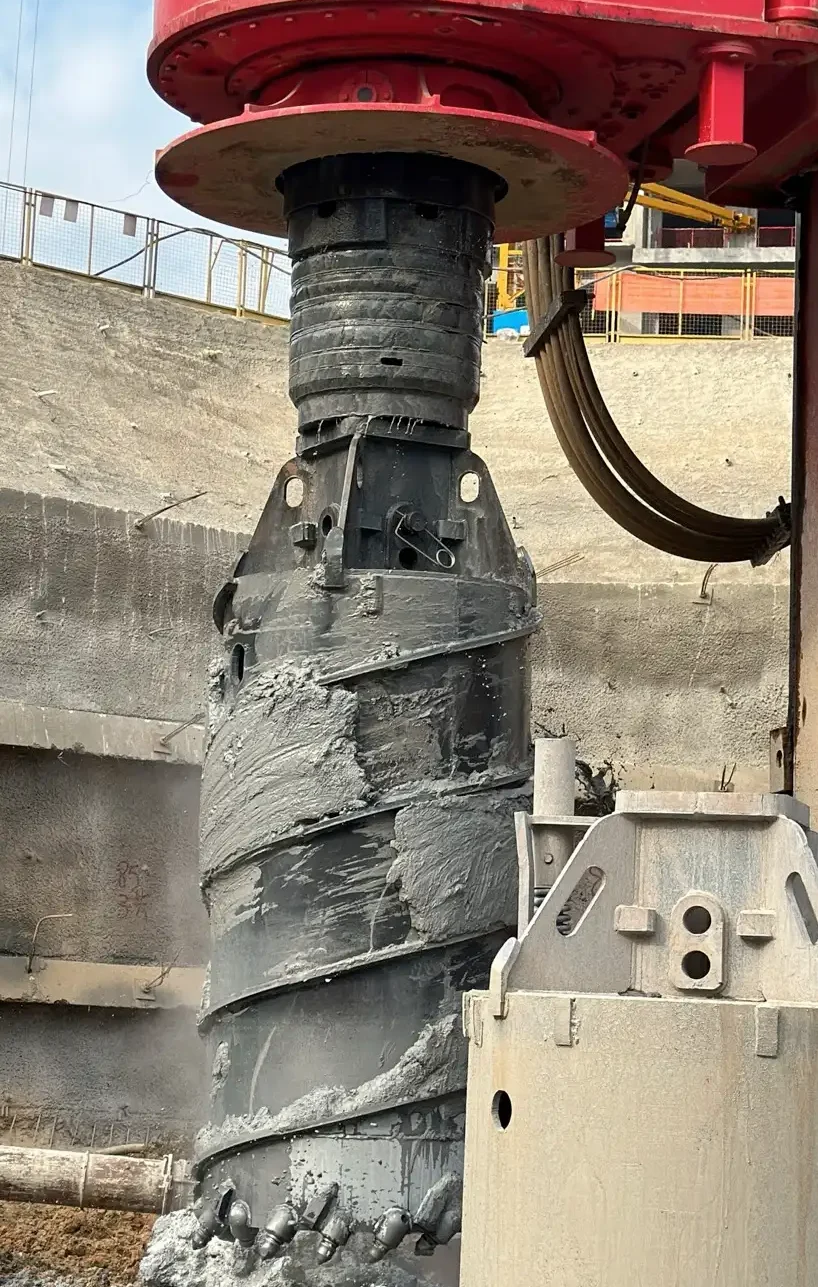
In foundation drilling projects, core barrels play a crucial role when penetrating rock formations. Selecting the right type of core barrel directly affects drilling efficiency, tool life, and overall project cost.
Among the commonly used designs, roller bit core barrels and bullet teeth core barrels are the two main solutions for rock drilling in rotary piling operations. Each type is designed for specific ground conditions. Understanding their differences helps contractors and equipment buyers make the correct selection for their jobsite.
This article explains how these two core barrel types work, what ground conditions they suit best, and how to choose the right option for your project.
What Is a Core Barrel in Foundation Drilling
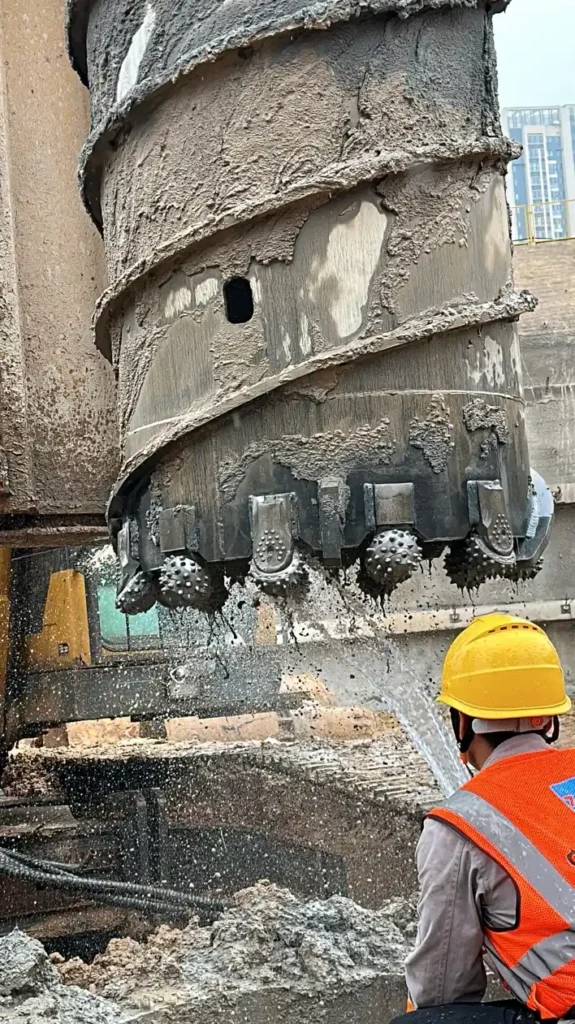
A core barrel is a rotary drilling tool used to cut and collect rock cores during piling and foundation drilling. It is typically applied when drilling encounters rock layers that standard drilling buckets cannot efficiently penetrate.
Core barrels are mounted to rotary drilling rigs and rely on cutting structures at the bottom to break rock. The choice of cutting structure determines drilling speed, wear resistance, and stability.
Roller Bit Core Barrel – For Hard and Intact Rock

Structure and Working Principle
A roller bit core barrel is equipped with one or multiple roller cone cutters, similar to tricone drilling bits used in oil and gas drilling. These cones roll as the barrel rotates, crushing and chipping rock under compressive force.
Suitable Ground Conditions
Roller bit core barrels perform best in:
- Hard rock formations
- Intact or massive rock layers
- High compressive strength strata
- Medium to hard limestone, sandstone, granite
Key Advantages
- Excellent penetration in hard rock
- Stable drilling performance
- Long service life in abrasive formations
- Efficient for deep rock socket drilling
Typical Applications
- Bridge pile foundations
- High-rise building foundations
- Infrastructure projects in rocky areas
Bullet Teeth Core Barrel – For Fractured and Weathered Rock
Structure and Working Principle
A bullet teeth core barrel uses tungsten carbide bullet teeth welded to the cutting ring. These teeth scrape, shear, and break rock through impact and abrasion during rotation.
Suitable Ground Conditions
Bullet teeth core barrels are ideal for:
- Weathered rock
- Fractured or jointed rock layers
- Soft to medium-strength rock
- Mixed soil-rock formations
Key Advantages
- Good adaptability to variable strata
- Simple structure and easy maintenance
- Lower manufacturing cost
- Easy tooth replacement on site
Typical Applications
- Urban foundation drilling
- Mixed ground conditions
- Weathered bedrock layers
Roller Bit vs. Bullet Teeth – How to Choose
| Condition | Recommended Core Barrel |
|---|---|
| Hard, intact rock | Roller Bit Core Barrel |
| Medium-hard rock with fractures | Bullet Teeth Core Barrel |
| Highly weathered rock | Bullet Teeth Core Barrel |
| Deep rock socket drilling | Roller Bit Core Barrel |
| Mixed soil and rock layers | Bullet Teeth Core Barrel |
Other Selection Considerations
When choosing a core barrel, contractors should also consider:
- Required borehole diameter
- Drilling rig torque and crowd force
- Project depth and rock thickness
- Tool replacement and maintenance cost
In many projects, combining both types on site is common practice — using bullet teeth core barrels for upper weathered layers and switching to roller bit core barrels when entering hard rock.
Customization for Different Projects
At Borsure, both roller bit core barrels and bullet teeth core barrels can be customized in:
- Diameter and cutting structure
- Tooth type and arrangement
- Connection size for different rigs
Proper customization ensures maximum drilling efficiency and tool life for specific geological conditions.
Conclusion
Choosing the right core barrel is essential for successful foundation drilling in rock formations.
- Roller bit core barrels are the best solution for hard and intact rock.
- Bullet teeth core barrels perform well in weathered and fractured strata.
By understanding ground conditions and tool characteristics, contractors can optimize drilling performance and reduce overall project costs.
For professional selection support and product details, feel free to contact Borsure.