
Introduction
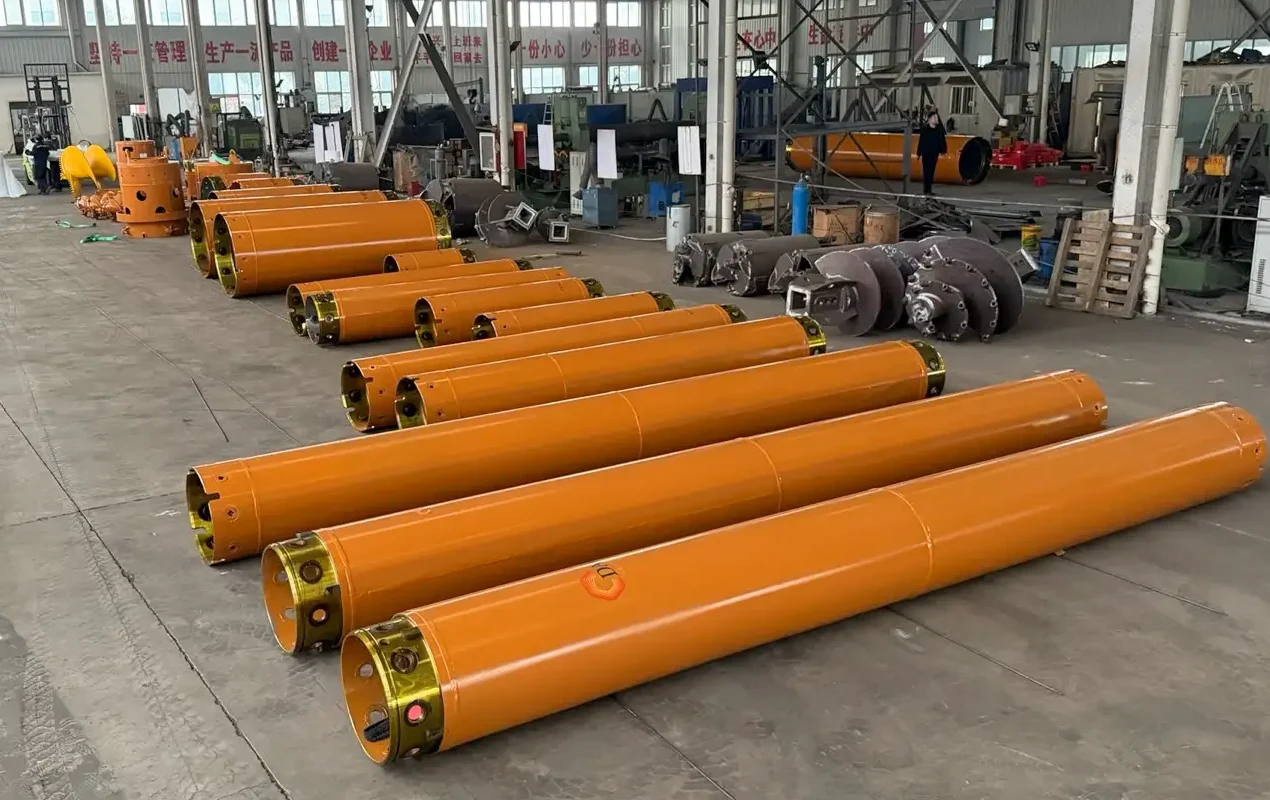
In pile foundation construction, choosing the right casing is essential for borehole stability, drilling efficiency, and accurate pile placement. Single Wall Casings and Double Wall Casings are two of the most commonly used systems. Understanding their structural differences, project applications, and soil suitability can help contractors select the best casing for each project stage.
1. Single Wall Casing
Description:
- A Single Wall Casing is a standard tubular casing with a single support structure designed to stabilize boreholes during pile drilling.
Typical Applications:
- Shallow to medium-depth residential and commercial foundations
- Standard urban construction sites with uniform soil layers
Construction Stage Use:
- Inserted during initial drilling to maintain borehole stability
- Often remains in place for pile casting guidance
Suitable Soil Conditions:
- Soft soils, sand, silt, and lightly cohesive clay
Advantages:
- Simple design, easy to install and transport
- Cost-effective for standard projects
- Suitable for projects with minimal borehole collapse risk
2. Double Wall Casing
Description:
- A Double Wall Casing features two support arms or an inner-outer tube structure, providing enhanced stability for deeper or more challenging boreholes.
Typical Applications:
- Deep foundation projects for high-rise buildings
- Infrastructure projects with mixed soil layers or unstable strata
Construction Stage Use:
- Supports boreholes during deep drilling
- Inner tube may be used for soil removal while the outer tube stabilizes the hole
- Ensures precise borehole diameter for pile casting
Suitable Soil Conditions:
- Cohesive clay, soft rock, mixed soils, and collapsible layers
Advantages:
- Superior borehole stability in challenging soils
- Reduces the risk of collapse during deep drilling
- Ensures accurate alignment for pile placement
3. Key Differences Between Single Arm and Double Arm Casings
| Feature | Single Wall Casing | Double Wall Casing |
|---|---|---|
| Structure | Single tube/arm | Double tube/arm |
| Typical Depth | Shallow to medium | Medium to deep |
| Soil Conditions | Soft, uniform soils | Mixed, cohesive, or unstable soils |
| Borehole Stability | Moderate | High |
| Construction Stage | Initial drilling & pile guidance | Deep drilling & accurate pile placement |
| Cost | Lower | Higher |
4. How to Choose Between Single and Double Wall Casing
- Assess Soil Conditions: Soft, uniform soils → Single Wall; Mixed or collapsible soils → Double Wall
- Determine Project Depth: Shallow projects → Single Wall; Deep foundations → Double Wall
- Consider Borehole Stability Needs: If the borehole collapse risk is high, the Double Wall is preferable
- Balance Cost and Efficiency: Single Wall is cost-effective for routine projects; Double Wall ensures precision in complex projects
Conclusion
Single Wall and Double Arm Casings each have distinct advantages depending on soil conditions, project depth, and borehole stability requirements. Selecting the right casing system ensures safer, more efficient, and precise pile foundation work. At Borsure, we provide a full range of Single Wall and Double Wall Casings, engineered for professional construction applications. Contact us today to choose the best casing solution for your next project.